 Write a comment
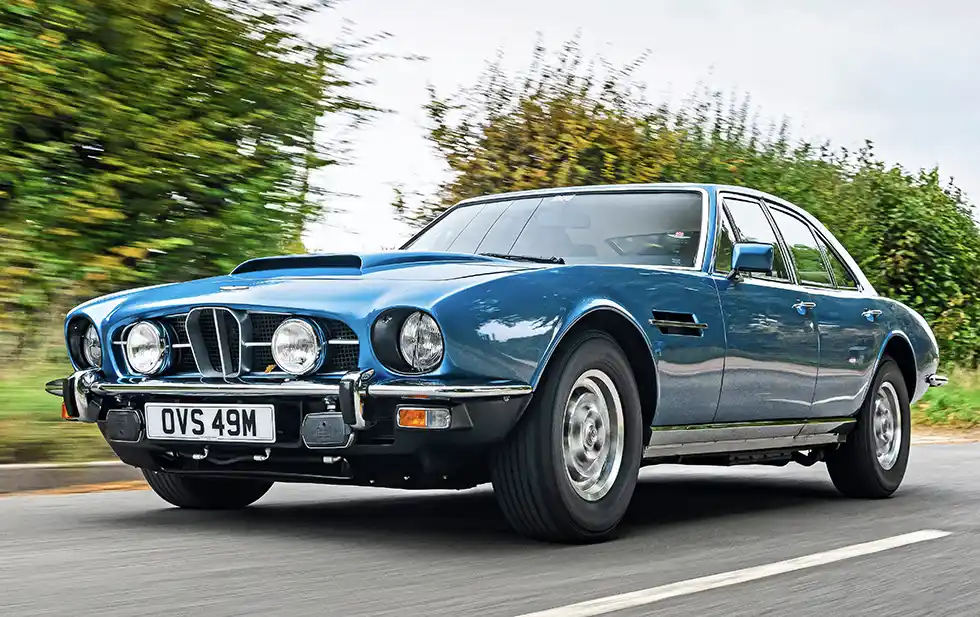
The 1974 Aston Martin Lagonda Series 1 is one of the most fascinating and underrated cars in British automotive history. Built at a time when Aston Martin itself was fighting for survival, this rare four-door luxury saloon was created as an ambitious attempt to challenge Rolls-Royce and Bentley in the high-end executive car market.
Only seven examples were completed in period, making it one of the rarest production Aston Martins ever built. More importantly, the Lagonda Series 1 laid the groundwork for the dramatic rebirth of the Lagonda name and played a crucial role in Aston Martin’s survival during the mid-1970s.
Why the Aston Martin Lagonda Series 1 Exists
The origins of the Lagonda Series 1 are tied, in an unexpected way, to the Rolls-Royce financial crisis of 1971. Rolls-Royce had poured enormous resources into developing the RB211 turbofan engine for the Lockheed TriStar airliner. Costs spiraled out of control after major redesign work, pushing the company into receivership in February 1971.
The British government nationalised the aero-engine division so the RB211 project could continue, but the rest of the Rolls-Royce business — including its prestigious car division — was left vulnerable. Suddenly, the future of luxury British motoring looked uncertain.
That shockwave spread far beyond Rolls-Royce. Investors and banks began reviewing other engineering groups, targeting weak or underperforming divisions. This had major consequences for David Brown’s empire, which included Aston Martin. On 16 February 1972, Aston Martin was sold.
Aston Martin’s New Owners and a New Strategy
Aston Martin was sold for a token £101 to Company Developments, led by chairman Stanley William Willson. Willson was not a traditional car enthusiast in the David Brown mould — he was viewed more as a hard-nosed businessman focused on restructuring and survival.
His first ideas included simplifying Aston Martin ownership by using more mainstream American V8 drivetrains for export markets, especially the United States. But when Ford refused to cooperate, Aston Martin needed a different solution.
With Rolls-Royce and Bentley appearing vulnerable, the answer became obvious: create a bespoke Aston Martin luxury saloon based on the company’s existing Aston Martin V8 platform and position it as a serious British alternative to the Rolls-Royce Silver Shadow.
Fortunately, there was already a template. David Brown had previously commissioned a unique four-door DBS V8 prototype, known internally as MP230. That one-off car became the basis for relaunching the Lagonda name.
Design and Styling: Aston Martin Meets Luxury Saloon
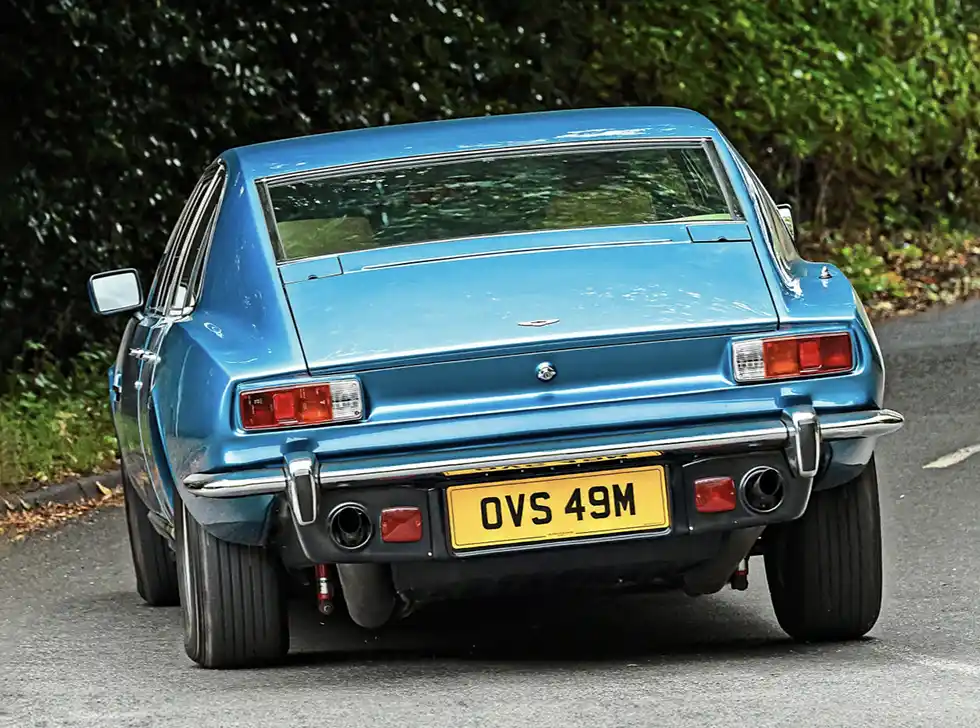
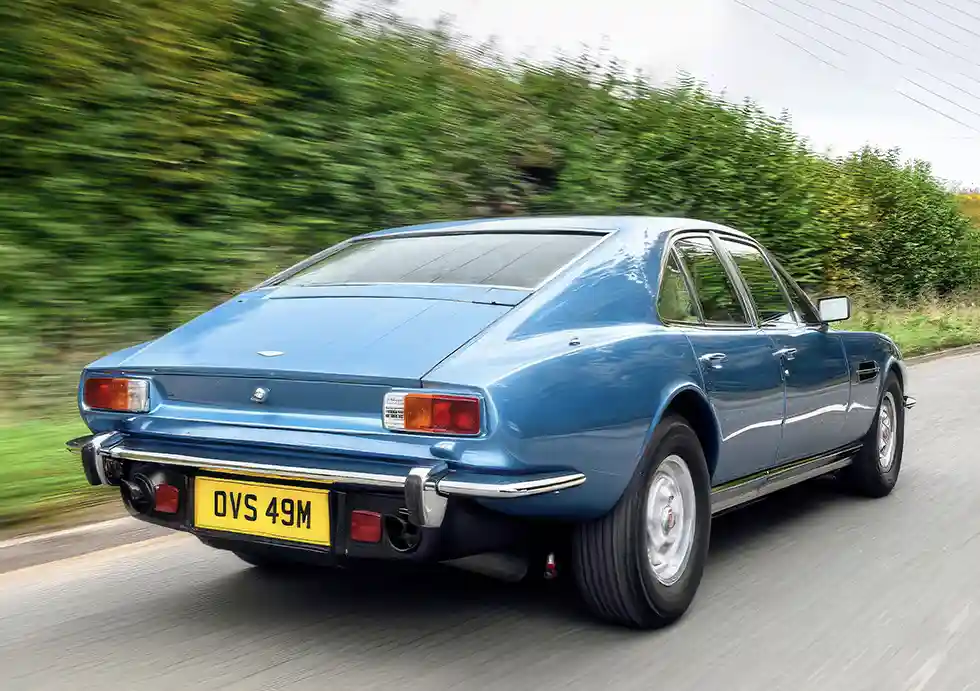
The Aston Martin Lagonda Series 1 retained the core character of the two-door Aston Martin V8, but with a stretched wheelbase, four doors, and a more formal luxury-saloon body style.
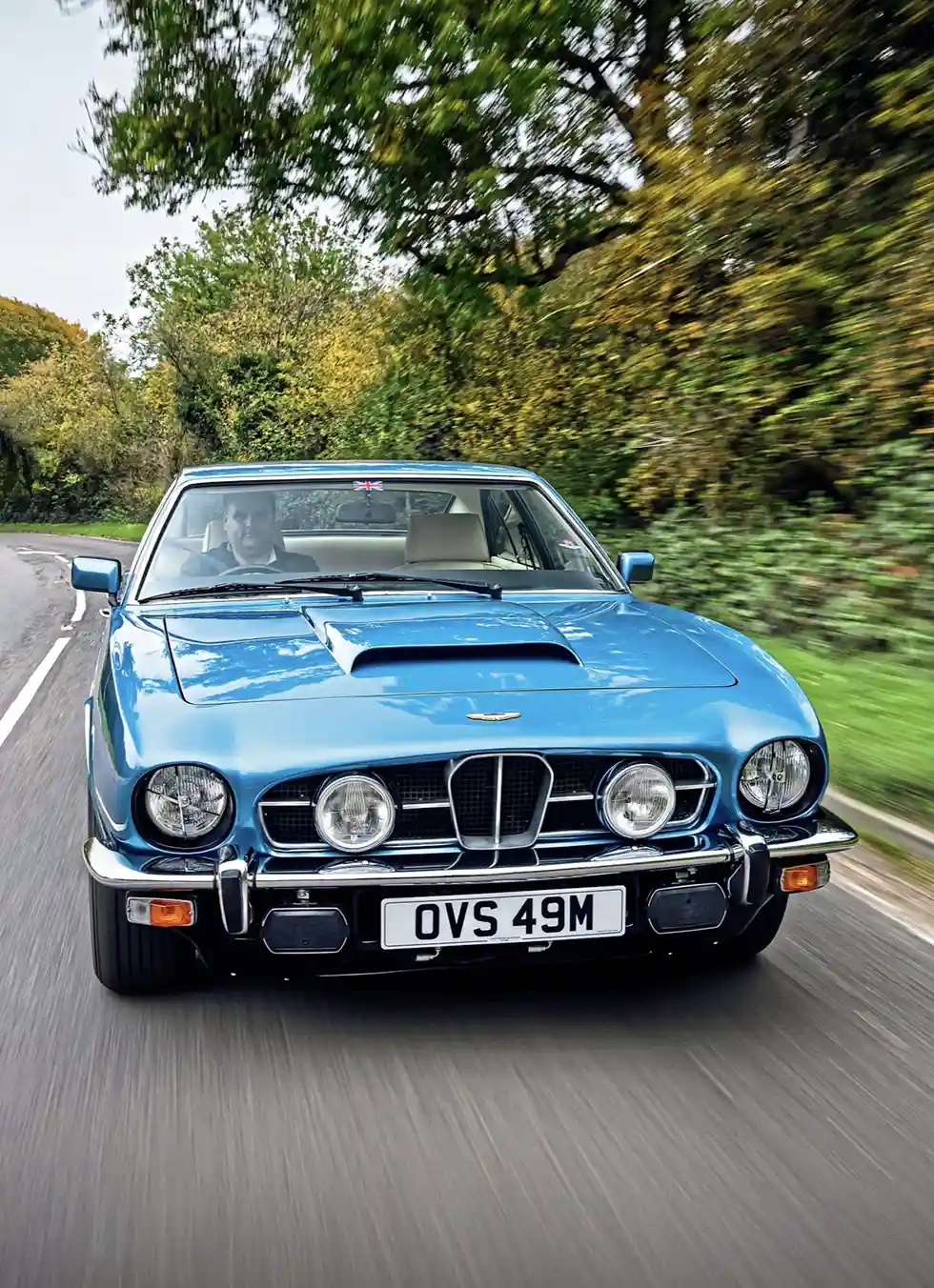
Its front end was unmistakably Aston Martin, but refined for a more sophisticated role. The traditional Lagonda grille shape was reinterpreted in a cleaner, more modern form, while styling changes linked the car to the evolving design language created by William Towns.
Compared with the shorter V8 coupe, the Lagonda’s extra length gave it a more elegant side profile, although its heavier rear treatment and taller ride height made it look slightly more formal and imposing. This was a car aimed at buyers who might otherwise have chosen a Rolls-Royce, Bentley, Iso Fidia, or Monteverdi 375/4.
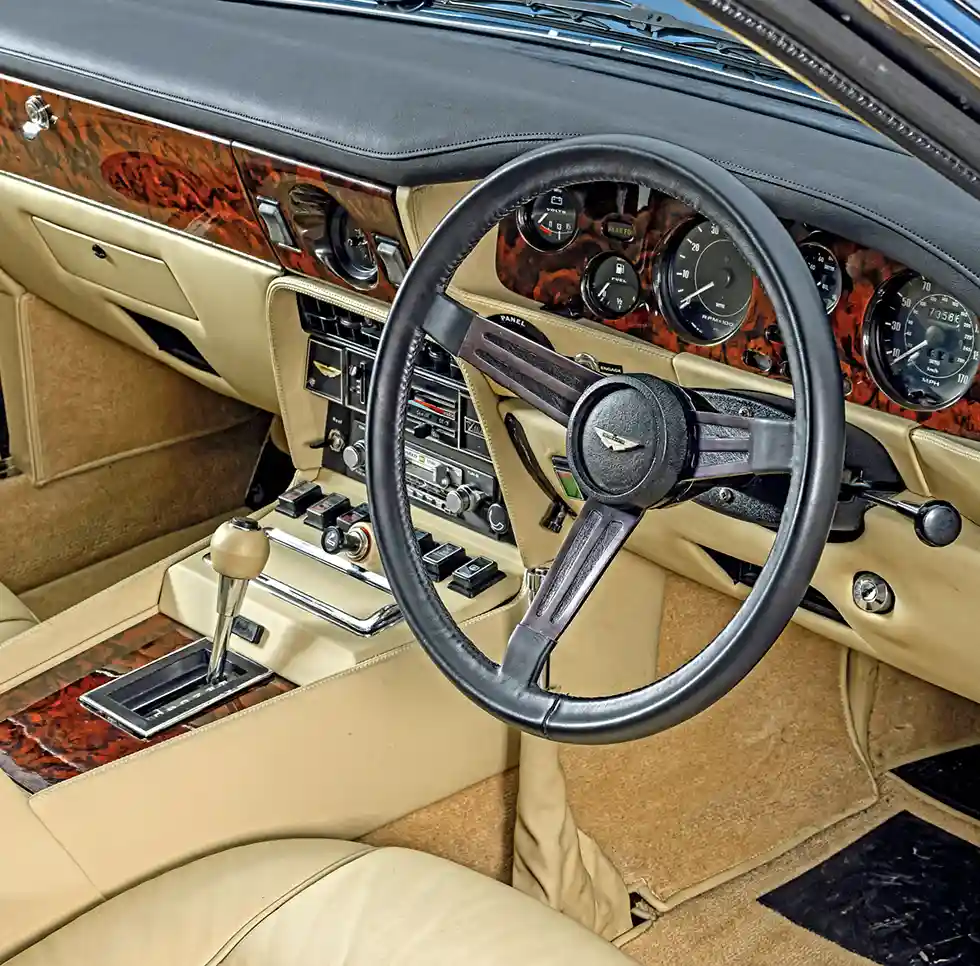
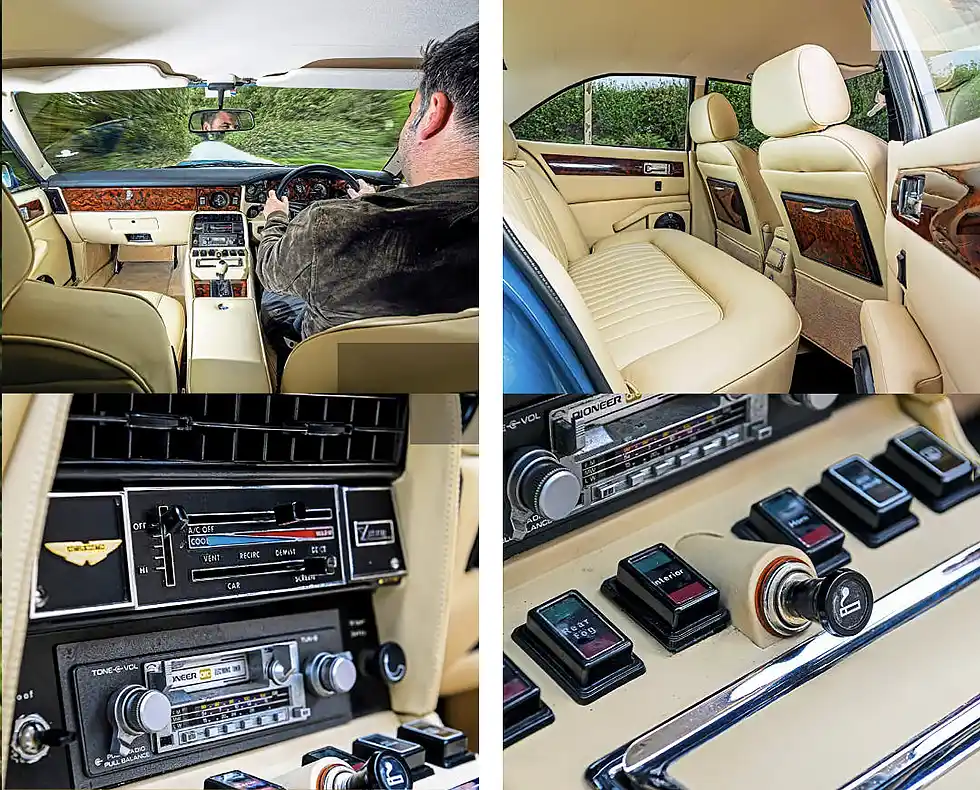
Inside, the Lagonda was a major step forward in luxury. While early Aston Martin V8 models could feel austere, the Lagonda introduced richer materials and more traditional premium detailing, including:
-
Lustrous wood veneer dashboard
-
High-quality leather upholstery
-
Deep-pile carpeting
-
Improved cabin space, especially for taller drivers
This interior treatment was so successful that elements of it later influenced Aston Martin’s mainstream V8 models.
Driving the 1974 Aston Martin Lagonda Series 1
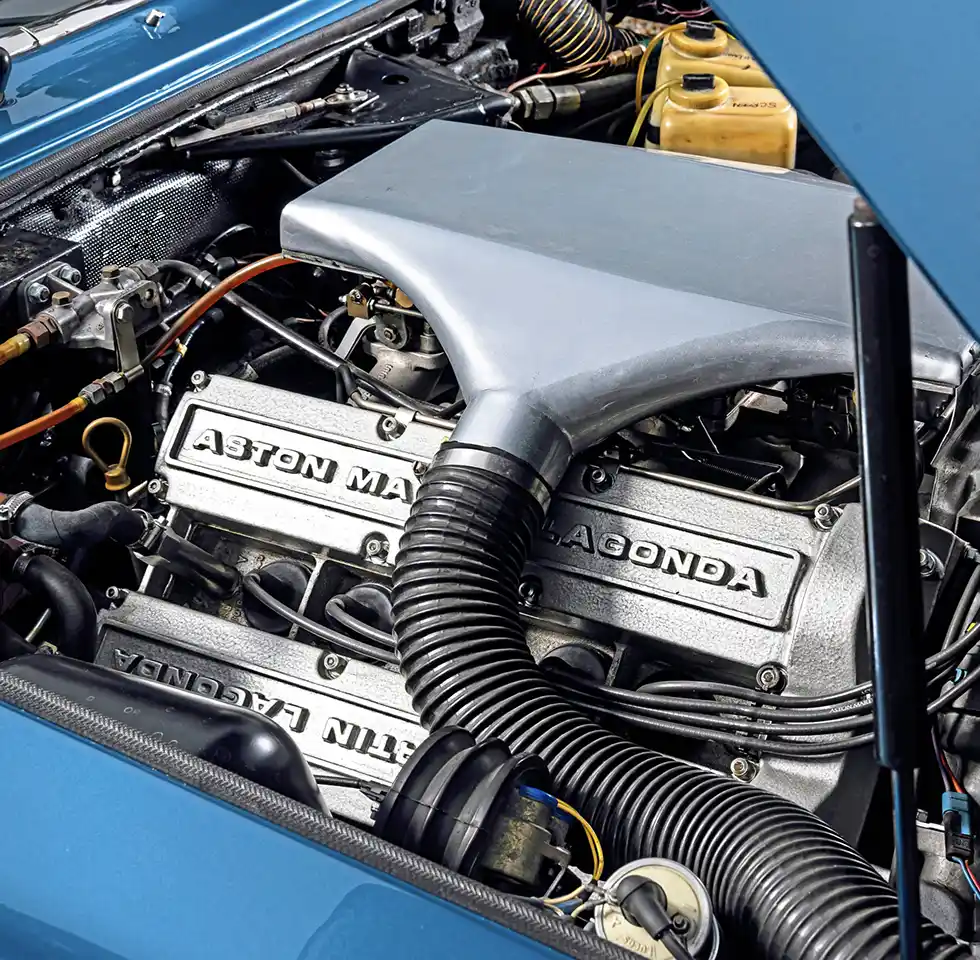
Unlike a Rolls-Royce Silver Shadow, the Lagonda Series 1 never tried to be whisper-quiet. Under the bonnet sat Aston Martin’s powerful 5.3-litre V8, fed by four Weber 42DCNF carburettors after earlier fuel injection systems proved troublesome.
On startup, the car feels muscular and dramatic. The V8 is loud, rich, and unmistakably mechanical, delivering the kind of soundtrack no Rolls-Royce owner would ever expect. But once cruising, the Lagonda settles into a refined, relaxed gait.
The main weakness is the three-speed Chrysler TorqueFlite automatic gearbox, which can feel too long-legged for brisk driving. There is plenty of torque, but progress is slowed by delayed shifts, increased noise under acceleration, and heavy fuel consumption.
Where the car truly impresses is in its road manners. Thanks to additional chassis bracing by engineer Mike Loasby, plus long-travel suspension and substantial tyres, the Lagonda combines impressive ride comfort with unexpected composure.
On real British roads, it feels remarkably capable:
-
Strong chassis stiffness
-
Supple suspension over poor surfaces
-
Stable high-speed cruising
-
Better cornering balance than a contemporary Silver Shadow
Rather than feeling like a stretched GT car, the Lagonda comes across as a genuinely convincing luxury saloon with sporting undertones.
Performance and Technical Specifications
The 1974 Aston Martin Lagonda V8 Series 1 offered serious performance for a luxury four-door car of its era.
1974 Aston Martin Lagonda Series 1 Specs
-
Engine: 5343cc V8, DOHC per bank, four Weber 42DCNF carburettors
-
Power: 306bhp at 6000rpm
-
Torque: 320lb-ft at 3000rpm
-
Transmission: 3-speed automatic, rear-wheel drive
-
Steering: Rack and pinion, power-assisted
-
Front Suspension: Independent, wishbones, coil springs, telescopic dampers, anti-roll bar
-
Rear Suspension: De Dion axle, trailing arms, Watt linkage, coil springs, lever-arm dampers
-
Brakes: Servo-assisted vented discs front and rear
-
Top Speed: 140mph
-
0–60mph: 8.8 seconds (estimated)
-
Weight: 1996kg (4400lb)
-
Fuel Economy: 10mpg
-
Original Price: £14,000
-
Current Guide Value: Around £400,000
Although heavier and slower than the two-door Aston Martin V8, the Lagonda still delivered impressive speed for a hand-built luxury saloon in the 1970s.
Why So Few Were Built
Despite its promise, the Lagonda Series 1 arrived at the worst possible time. The 1973 oil crisis, triggered by the OPEC embargo during the Yom Kippur War, pushed fuel prices sharply higher and made thirsty luxury cars a much harder sell.
Aston Martin, already financially fragile, could not withstand the pressure. Just days after the 1974 Earl’s Court Motor Show, the company entered receivership. Production at Newport Pagnell stopped, and the future looked bleak.
Only seven Series 1 Lagondas were completed during the original production run. An eighth unfinished car was later completed in 2007 by Aston specialist Roger Bennington.
How the Lagonda Helped Save Aston Martin
Although the Series 1 itself was not a commercial success, it was critically important. It proved there was still substance, talent, and ambition at Aston Martin during one of the darkest moments in the company’s history.
In 1975, Aston Martin was rescued by a group led by Peter Sprague and George Minden, preventing the company from being broken up. Soon after, designer William Towns proposed an all-new, radically futuristic Lagonda with sharp wedge styling and an electronic interior.
That car became the iconic Lagonda Series 2, one of the most visually dramatic luxury saloons ever built.
Without the Series 1 keeping the Lagonda project alive — and demonstrating that Aston Martin could still create a credible high-end four-door flagship — that next chapter might never have happened.
Ownership Insight: Gordon Wyles on the Feature Car
According to owner Gordon Wyles of Chiltern Aston Centre, this particular Lagonda is one of the most original surviving Series 1 examples.
When he acquired it from only its second owner, the car had been repainted bronze in period to make it more saleable. It was later restored to its original Cosmic Fire Tourmaline Blue, with careful attention paid to preserving originality.
The restoration included:
-
Repainting in original factory colour
-
Interior retrimming due to wear
-
Mechanical work requiring engine removal
-
Preservation of the original body structure, which remained notably corrosion-free apart from a radiator support bracket
Given how many Series 1 cars were modified over time — some receiving larger engines or later body updates — originality makes this example especially significant.
Why the Aston Martin Lagonda Series 1 Matters Today
The Aston Martin Lagonda Series 1 is far more than a rare classic Aston Martin. It is a bridge between eras: part traditional hand-built British V8 grand tourer, part experimental luxury flagship, and part survival story.
Today, collectors value it for several reasons:
-
Extreme rarity
-
Direct link to Aston Martin’s 1970s survival
-
Early revival of the Lagonda name
-
Strong historical importance
-
Distinctive combination of luxury, performance, and craftsmanship
At around £400,000, the Series 1 is not just a valuable collector’s car — it is one of the most historically important Aston Martins of its period.
Final Thoughts
The 1974 Aston Martin Lagonda Series 1 may have been built in tiny numbers, but its significance is enormous. Conceived in crisis, developed under financial pressure, and launched into one of the toughest economic climates imaginable, it was a bold attempt to reposition Aston Martin in the luxury-car world.
It did not save the company by sales volume alone. But it kept the idea of a new-generation Lagonda alive — and that idea helped secure Aston Martin’s future.
For collectors, enthusiasts, and historians, the Aston Martin Lagonda Series 1 remains one of the most compelling rare British luxury cars of the 1970s.