Write a comment
Virgil Exner's career revolutionized American car design, moving Detroit from restrained forms to bold excess with Chrysler's 'Forward Look'. This article looks at his triumphs, controversies, and enduring legacy.
Born in Ann Arbor, Michigan, on September 24, 1909, Virgil Exner experienced a turbulent early life. Abandoned by his birth parents and later adopted by George and Iva Exner of Buchanan, Michigan, he developed a keen interest in fine art and automobiles from a young age, honing his skills while racing a modified Ford Model T in his neighborhood.
A design purist with a penchant for excess, Exner left college midway through a four-year course to work in advertising. Married in 1930 and a father three years later, his career trajectory changed following a commission from a local newspaper. This led to a role influencing future automotive trends, eventually landing him a job in the industry. In 1938, Exner moved to New York to work with famed industrial designer Raymond Loewy. Their working relationship soured due to Loewy's reluctance to share credit, ultimately resulting in a hidden rivalry during the design of the post-war Studebaker Champion—Exner's vision won out.
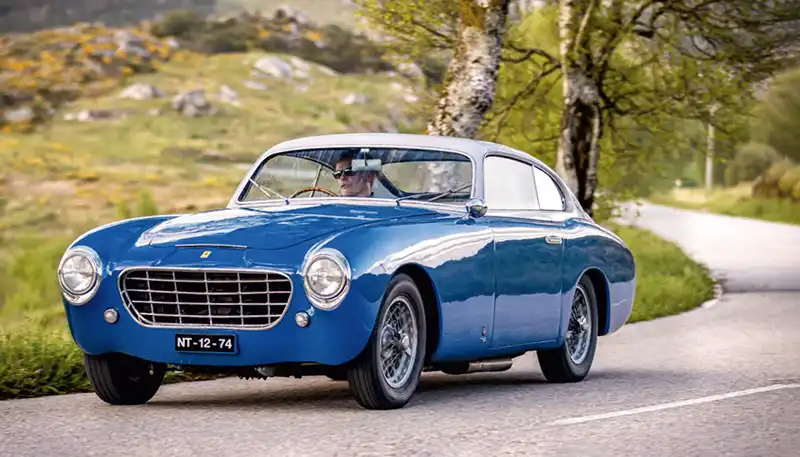
In 1949, Exner joined Chrysler as Chief of Advanced Design after persistent effort, eventually gaining the influence to apply his minimalist 'Forward Look' philosophy. He collaborated with Italian coachbuilders, notably Ghia, creating a series of influential concept 'idea cars' that captured the public's imagination. The partnership propelled Chrysler to the forefront of 1950s style with landmark production models, including the dramatic 1955 Chrysler line. As Exner later took charge of Dodge, DeSoto, and the handbuilt Imperial lines, his health began to decline due to the pressures and his own lifestyle habits, leading to a heart attack in 1956.
After extensive surgery and a difficult recovery, Exner returned to oversee the acclaimed 1957 model range. However, an infamous misunderstanding in 1961 resulted in Chrysler downsizing its vehicles for the 1962 model year, a move that proved disastrous in the marketplace. Blame for the failure fell on Exner, leading to his dismissal in November of that year, compounded by the misfortune of his house burning down shortly after.
Undeterred, Exner continued to design, working on a variety of projects including a new Stutz Blackhawk, launched in 1969. He remained active in design until his death on December 22, 1973, at the age of 64, following an aneurysm.
Virgil Exner's legacy looms large in automotive history. Celebrated and controversial in equal measure, his daring designs forever altered the landscape of American car design, teetering on the edge of extravagance but achieving enduring recognition as some of the most distinctive vehicles to reach production.