Write a comment
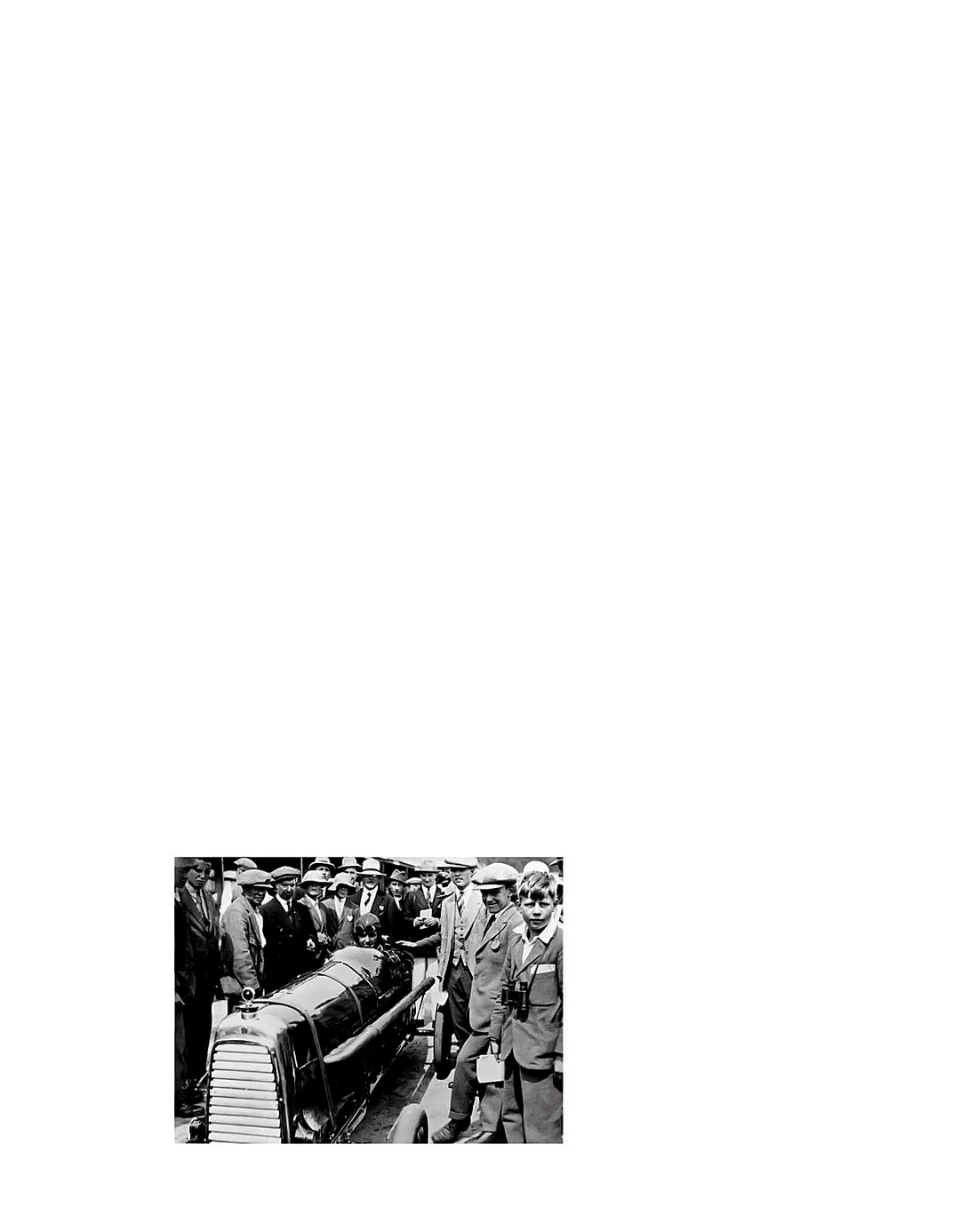
Explore the story of the 1922 Aston Martin Razor Blade, renowned for its remarkably thin body and its ambition to break speed records. This unique racing car remains a testament to early motorsport innovation and aerodynamic design.
When chasing speed records, reducing aerodynamic drag is key. The 'Cd', or drag coefficient, and frontal area determine a car's efficiency. In the 1920s, innovative solutions focused on minimizing both. The Aston Martin Razor Blade, known as the thinnest racing car ever made, exemplifies these efforts.
From above, the Razor Blade appears as a blade, its body almost invisible from certain angles. Created in 1922 and initially called 'Oyster', this car aimed to break the record for the highest speed maintained over an hour in a 'light car' class (under 1500cc engine capacity) at Brooklands. Aston Martin faced tough competition from AC in this quest.
Its chassis, numbered 1915, resembled an earlier model but was sharply narrowed aft of the engine. A body just 18.5 inches wide and a narrow rear track were the results of De Havilland's aeronautical expertise, with special features such as a vertical tail slot for airflow. Early tests revealed heat accumulation issues, leading to modifications of the cockpit cover. The car's name changed to Razor Blade after the revision.
The right-front tyre was a weak point, frequently bursting during high-speed runs at Brooklands, especially as the car exited the banking at speeds exceeding 100mph. Despite its speed, Razor Blade struggled with endurance, suffering from repeated tyre failures and broken torque tubes. Ultimately, AC claimed the hour-long 100-mile record in 1922, but the Razor Blade remained competitive in shorter events.
Braking was a notorious weakness. Early rear brakes, sourced from a 10hp Singer, proved inadequate. Over the years, improvements included larger brakes from a 1923 Aston, though the track remained narrower than the front. By 1960, after being rescued from a breaker's yard, the Razor Blade underwent restoration, with further refurbishment in the 1990s restoring much of its original configuration.
The car's engine—a four-cylinder with twin overhead camshafts and sixteen valves—was impressive for its era. Producing 55bhp at 4200rpm, it was based on technology partly derived from French Ballot straight-eights and designed with help from Marcel Gremillion. Unique features included individual drip-feed lubrication systems for the camshafts and drive.
An experience behind the wheel reveals the narrow, confining cockpit, minimal driver space, and manual starting procedures. Despite these challenges, the Razor Blade’s pioneering design and racing history cement its status as an icon of early 20th-century motorsport engineering.