Write a comment
A road test and historical look at the 1922 Aston Martin Razor Blade, exploring its unique driving experience, remarkable history, and technical details.
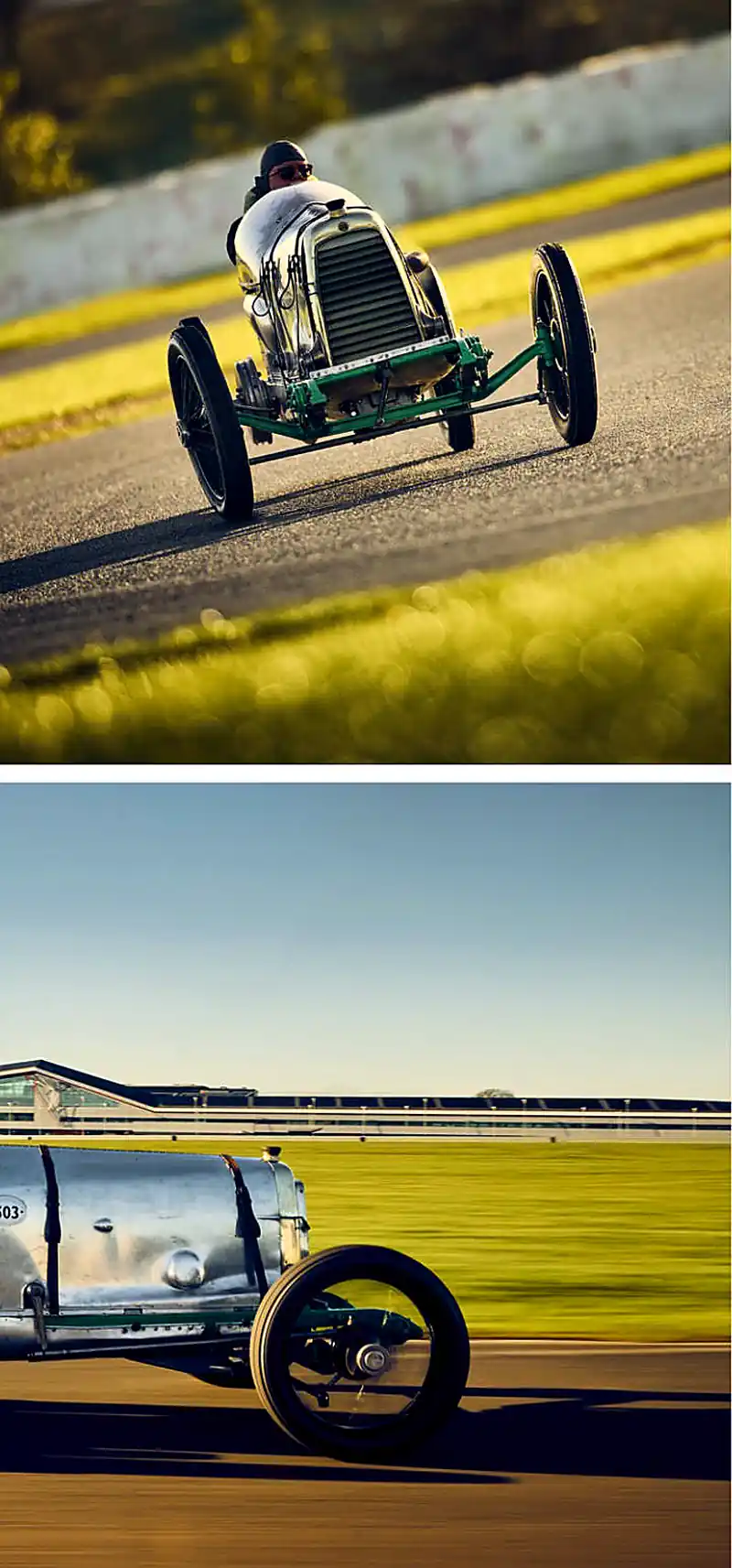
The 1922 Aston Martin Razor Blade delivers a memorable driving experience, blending vintage challenges with innovative solutions for its era. The accelerator, conveniently on the right unlike most early Astons, allows the driver to focus attention on the unconventional gearbox, with a gate rotated 180º from the usual pattern. Separate from the engine, the Hele-Shaw clutch is particularly noticeable, featuring an extraordinary 19 plates.
The car's dashboard displays revs (temperamental), water temperature, and oil pressure—of which the last, in particular, demands close monitoring. Above the gauges are the three valve-gear oilers, not to be touched, and a handle on the right that operates the horizontal radiator shutters for streamlined driving.
Setting off, the multiple clutch plates initially behave almost like a viscous limited-slip differential until the oil warms up. The clutch is surprisingly light and smooth, and the gearbox becomes progressively slick after initial crunchiness. The exhaust note is crisp, overlaying the commotion of mechanical movements under the bonnet, and the brakes offer meaningful retardation.
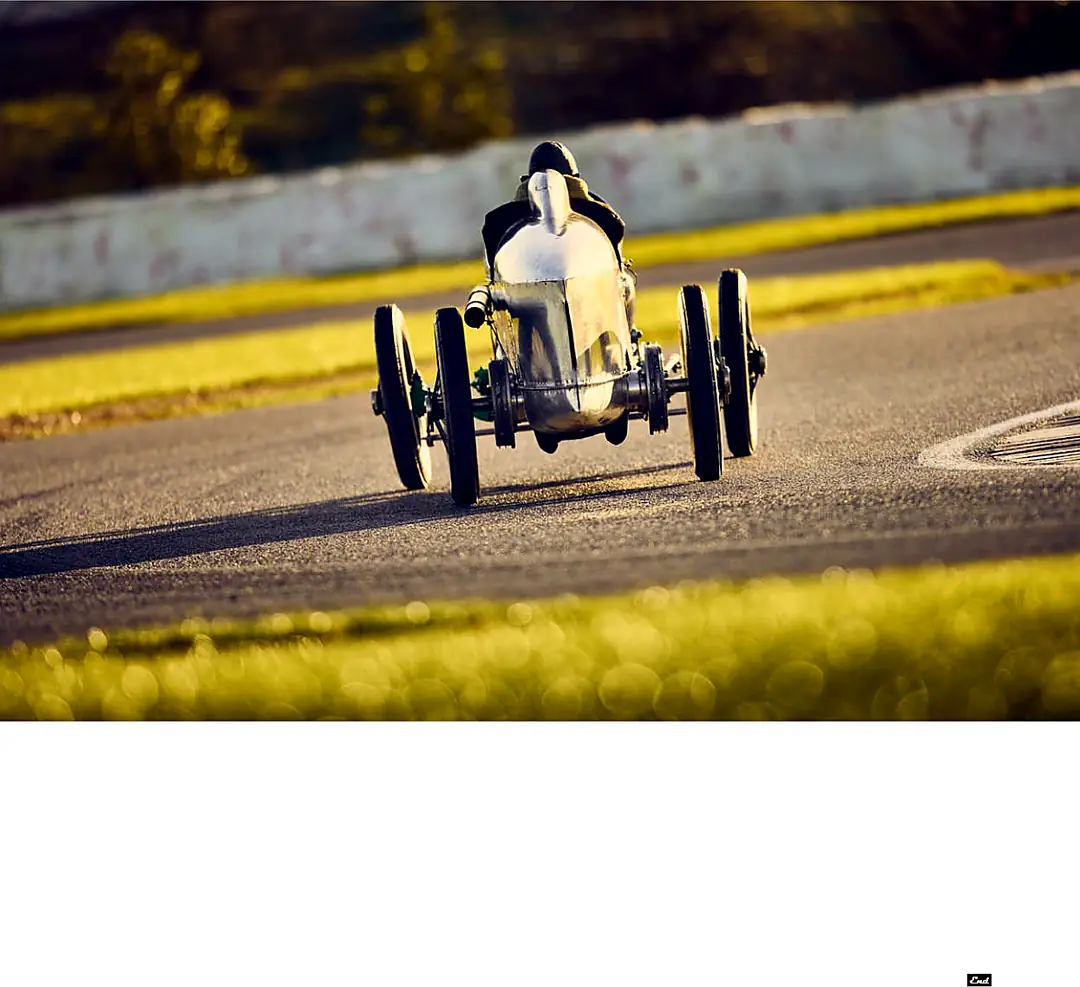
Once up to speed, the Razor Blade—a car with rear-wheel drive, locked differential, very stiff springs, and a narrow track—feels less precarious than expected. Its quick steering and firm suspension mean it understeers strongly until the rear wheels are powered. The experience is thrilling but demands respect, especially given the car's unique bodywork and legacy.
This significant Aston Martin competed with notable drivers like Kensington Moir, Eyston, Davis, Humphrey Cook, and Capt JC Douglas, achieving class records for the standing-start half-mile, kilometre, and mile, as well as strong showings at Brooklands and in hillclimbs and speed trials during the 1930s. It continued to compete into the 1950s before being restored in the late twentieth century, with James Cheyne overseeing a programme to return the car to its 1920s specification with expert restoration from Sean Danaher. The car's registration was eventually reactivated, making it road legal once again for the adventurous.
The Razor Blade remains a unique piece of Aston Martin history, now on display and occasionally competing, and is currently offered for sale. Among its anecdotes is a tale of a 1930s owner whose wife would sit astride the tail for touring—perhaps not the safest idea, but a testament to the car's spirit of adventure.
Specifications:
Engine: 1488cc DOHC four-cylinder, 16 valves, Claudel Hobson updraught carburettor
Power: 55bhp @ 4200rpm
Transmission: Four-speed manual non-synchro, rear-wheel drive, locked differential
Suspension: Front—beam axle, semi-elliptic leaf springs, Hartford friction dampers; Rear—live axle, torque tube, quarter-elliptic leaf springs, Hartford friction dampers
Steering: Marles worm-and-peg
Brakes: Drums, rear only
Weight: approx 800kg
Top speed: 100mph
Thanks to Ecurie Bertelli, where Razor Blade is for sale.